
The Marls 2026
The struggle to find the beautiful in what many consider paradise destroyed.

Note: This is a longer article with lots of pictures, you will get the best viewing experience in the app or via the webpage.
This is a continuation of last week’s post about fishing at Abaco Lodge on Great Abaco in the Bahamas.
Don’t let the subtitle of this article fool you, the Bahamas are beautiful when taken in through the eyes and processed through your brain. Your brain is an amazing tool that is both revealing and concealing of the world around you. What our brains show us is a combination of what is there (as seen through our eyes) combined with some elements of how we feel (mentally, physically, and emotionally), as well as any number of things in our lives that have influenced us, resulting in us seeing a scene that is really unique to each of us, even though multiple people may be witnessing the same sights.
A camera, on the other hand, is quite different. All it can do is capture a static scene, and when presented to a viewer (especially one that was not there and did not witness the scene) there is a loss of that additional intangible input from the brains. How often have all of us heard or said “my images just don’t look the way I saw it…” or “I never noticed that (fill in the blank) when I was taking the picture…”. So what I see as the beauty of my surrounds in the moment, often just looks like a flat colored pile of twigs or granite mountain side when I look back through the images. This is where the artistic side of the photographer has to come in and bring the life back into an image.
Great Abaco, and The Marls, were left pretty beaten and battered when Hurricane Dorian came through in 2019. Entire cays disappeared, millions of mangroves were destroyed or picked clean of all their leaves (something the plant will struggle to recover from), and (because mangroves grow extremely slowly after their sapling stage) decades of growth of this natural shelter and shading mechanism for fish, as well as to help regulate the temperature of the waters, were lost. As a result of the storm, the landscape looks quite different and often times quite bleak.
There are still scenes like these from the dock of Abaco Lodge looking out across the vast expanse of The Marls, where distance and field of view blend much of the scene into something that is actually quite beautiful.
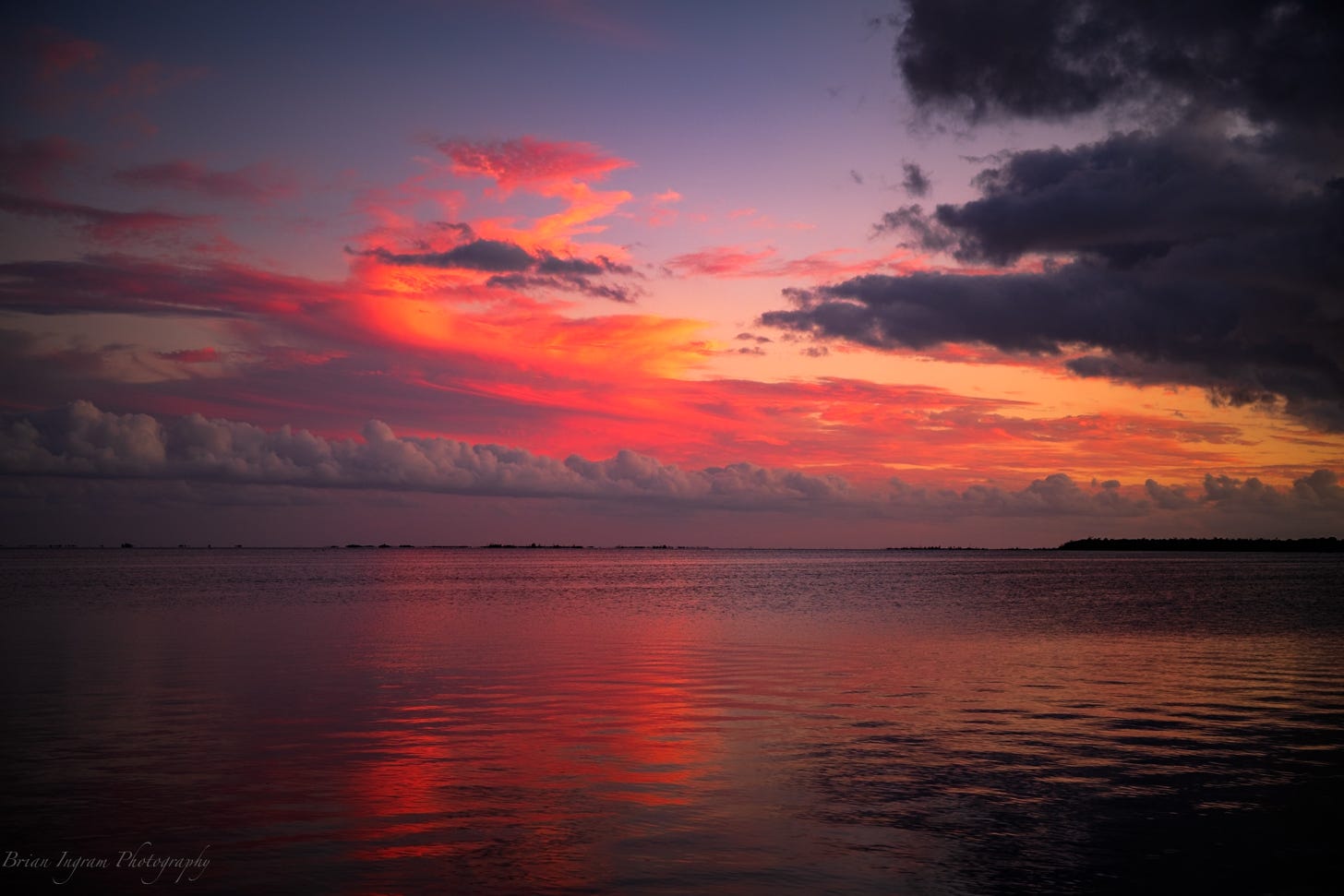


However, those islands in the distance, and the cays beyond look quite different when you are up close drifting through them on a flats boat.
Bonefish fishing, as well as Permit, is an interesting recreational choice…. To spot, cast to, and ultimately catch the fish you are ideally wanting bright clear sun (so you are covered from head to toe in light clothing to try and keep from getting burnt to a crisp, but also not pass out from a heat stroke), low wind (no wind means you get devoured by the local insect life, so you want something like a 1 mph breeze to keep the bugs down, but still be able to cast), and calm waters (choppy water makes it so that even in direct sun you can’t distinguish the fish from all the ripples and waves on the waters surface). Anyone that has ever done this knows that you rarely get all three of those, and often get none.
Normally what you get (that you can actually work with) is broken clouds providing moments of clear sun, calm-ish water (The Marls are relatively protected), and higher than desired wind (to keep the clouds moving). That is normally enough for you to comfortably peel off a bunch of line from your reel, hold your fly in your hand, and stand there on the bow of the skiff in the blazing sun for hours waiting for the guide to say something like “…cast eleven o’clock fifty feet…”. At which point you drop the fly, raise the rod and have to make a near perfect cast of fifty feet of line without letting the line or the fly touch the water, and without false casting more than once or twice (if you are lucky). More than one or two false casts and the line will drift and you will hook yourself, the guide, your friend, or anything else (it is a well known fact that when casting to a big bonefish, anything that the line could conceivably touch will magically appear and the line will hit it), preventing it from going anywhere, or worse it will go out in some errand direction, hit the water, and spook the fish. Keep in mind that you have not yet seen what you are casting to, just the direction and distance. Normally the point that you see the fish you so want to catch is when your cast lands in the water too close to the fish and the fish bolts off in the complete opposite direction. That is when you instinctually drop your shoulders and stare as this dark line shoots across your field of view in a completely unnatural way, revealing that there were in fact two or even three fish… This is when you mouth a little curse at the fish for spooking and at yourself for failing generate the optimal cast. Then you pull your line in, drop it at your feet, swing your fly around and grab it, and wait once again.
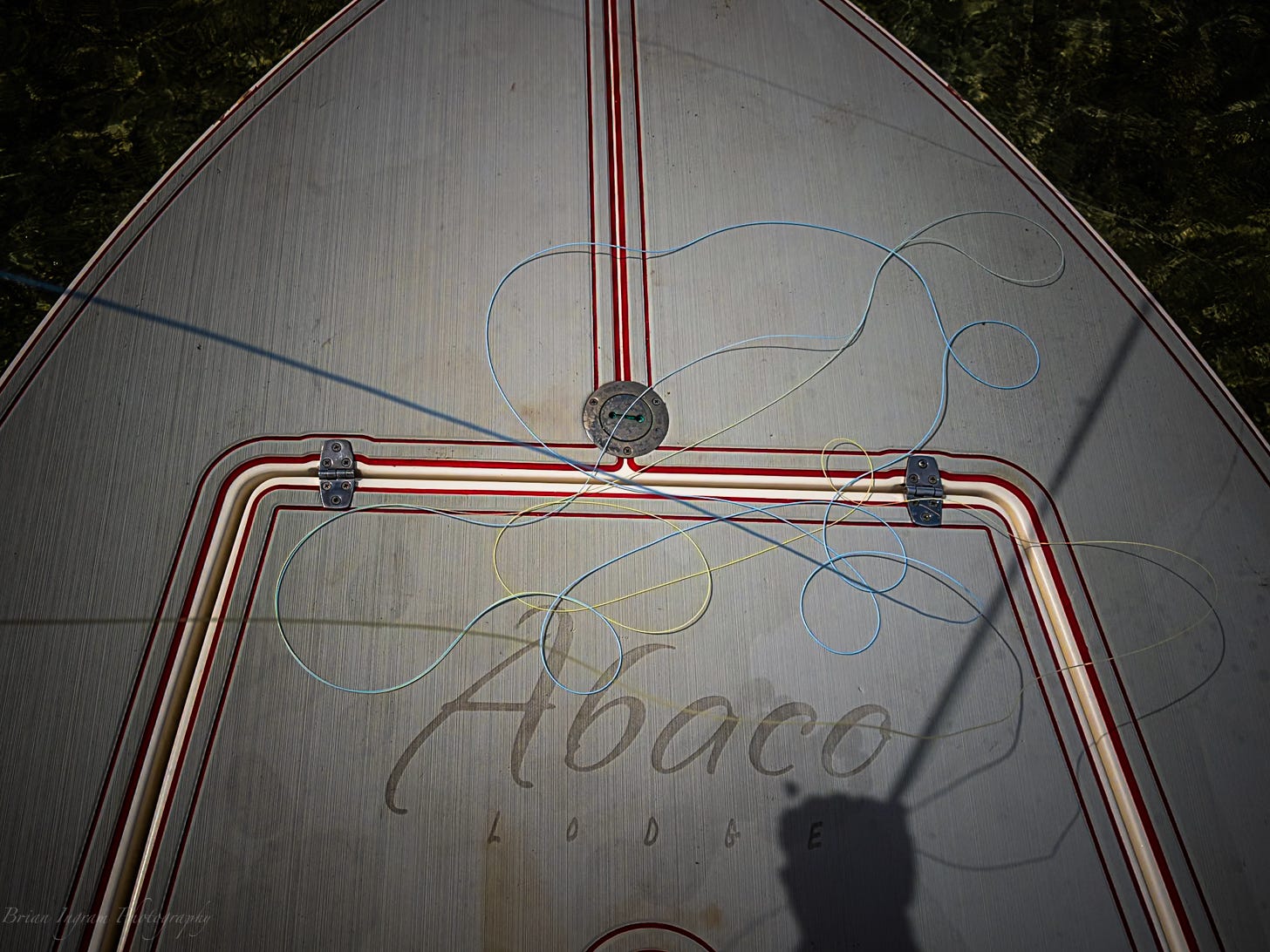
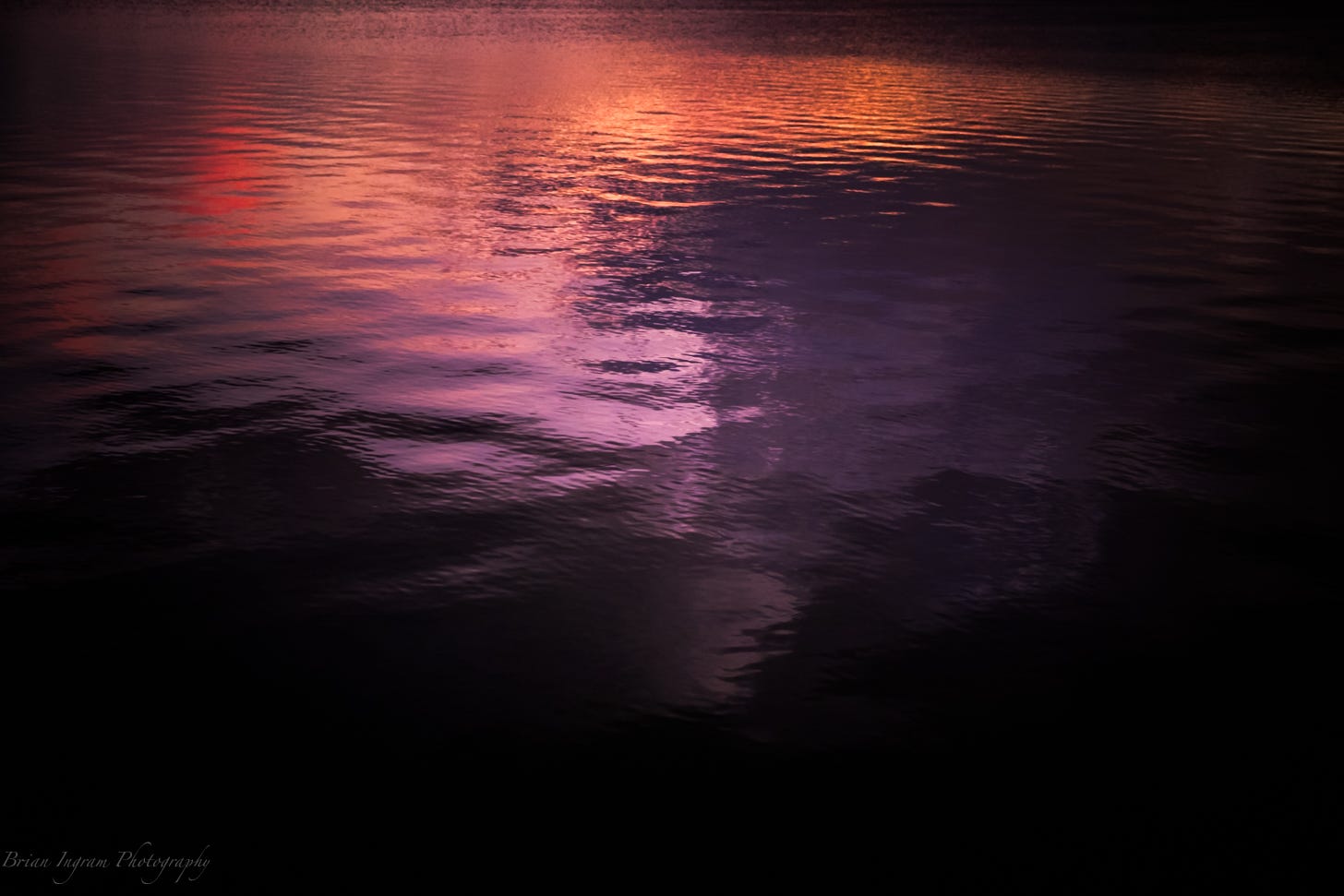
While you are standing on the bow of the boat, in the hot sun, sometimes for hours, looking for ripples in the water that are actually not ripples, bottom, or undesirable fish (they always seem the easiest to spot), waiting for those fateful words, you start to see the surrounding areas in different ways. One of the things I have always stated is that people need to slow way down and just be in a spot for a long time to really see what is around you and to really see the beauty, even in places that seem to have so little. Even the surface of the water starts to reveal things to you when you are doing nothing but looking into it for hours.


Normally you are silently drifting along the flats of some small cay or unnamed sand bar gliding through water that is only a couple feet deep. The guide is standing on a platform above the engine maneuvering the boat along the shore trying to keep you in the optimal position to make the best cast you can in the most likely direction the fish will be coming from (anyone that thinks being a bone fishing guide would be easy has no clue what it is really like standing in the back-cast zone of a novice fly caster on a windy day. Managing not to get frustrated and skewer you with the pointy end of their flats pole is a level of patience I have never had). As I was moving along the shoreline of these cays and islands devastated by Dorian, I would often not see the paradise of a lush green island with lovely sand beach and cool tropical waters. What I often saw now were single tall trees devoid of leaves, the twisted inner workings of the mangroves, or a shore line that is lifeless, or just starting to come back to life. So you start to see things in entirely different ways. My imagination usually goes dystopian with scenes like these pretty easily and quickly, just my personality (and maybe too much Dark Tower and Lord of the Rings).
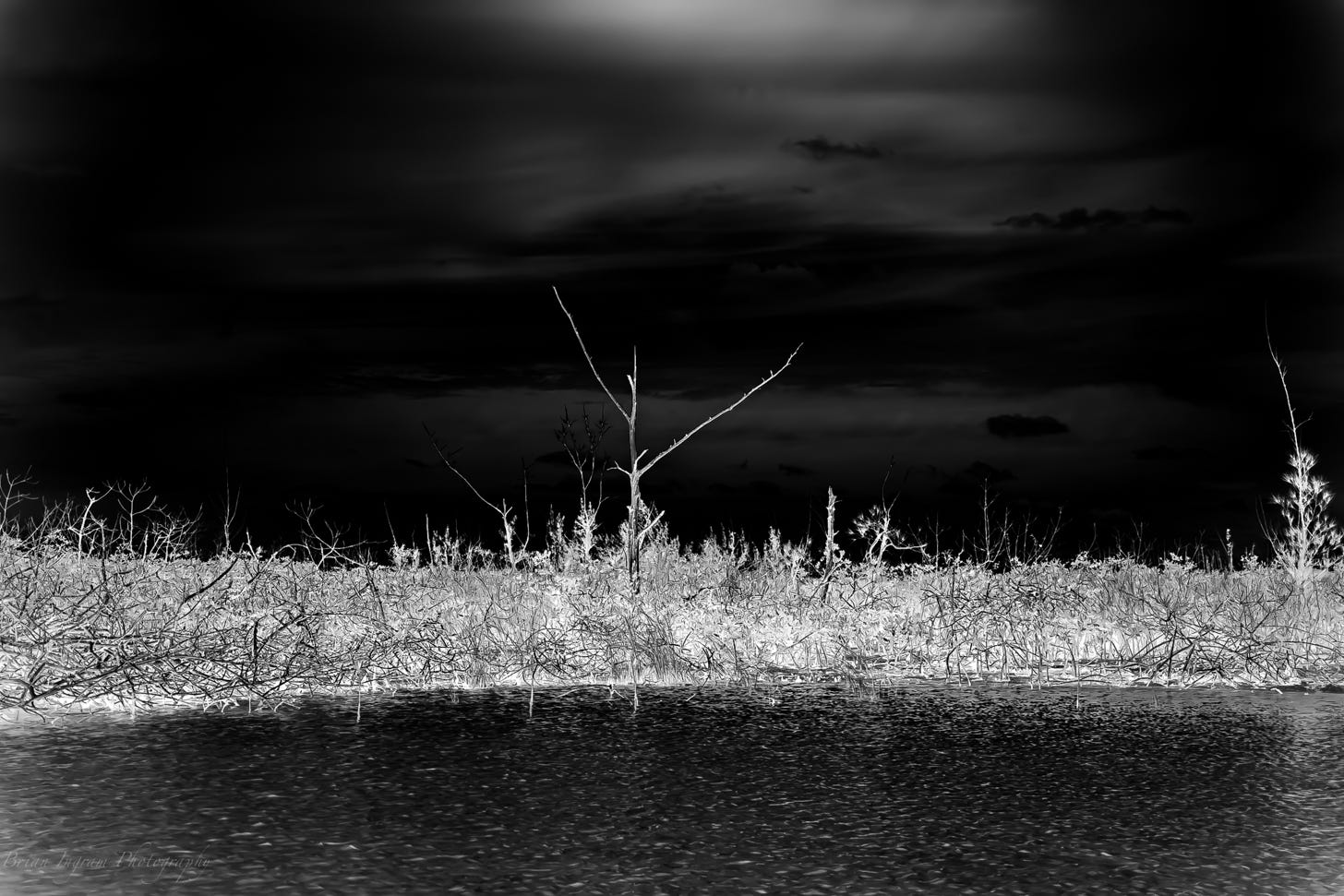


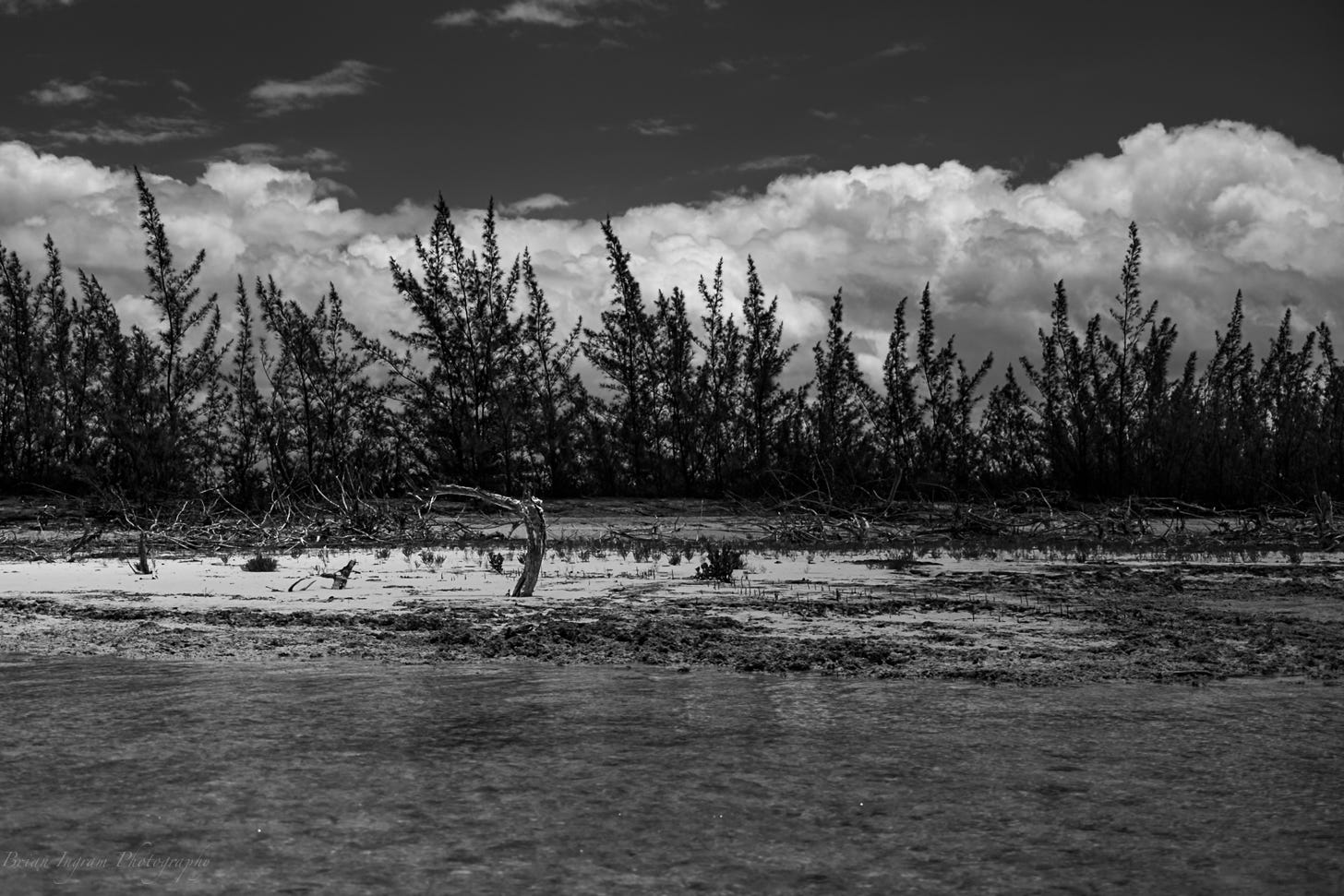
But even in the twisted remains of once vibrant life, there is still moments and tidbits of beauty that you just have to look for, and be open to seeing.
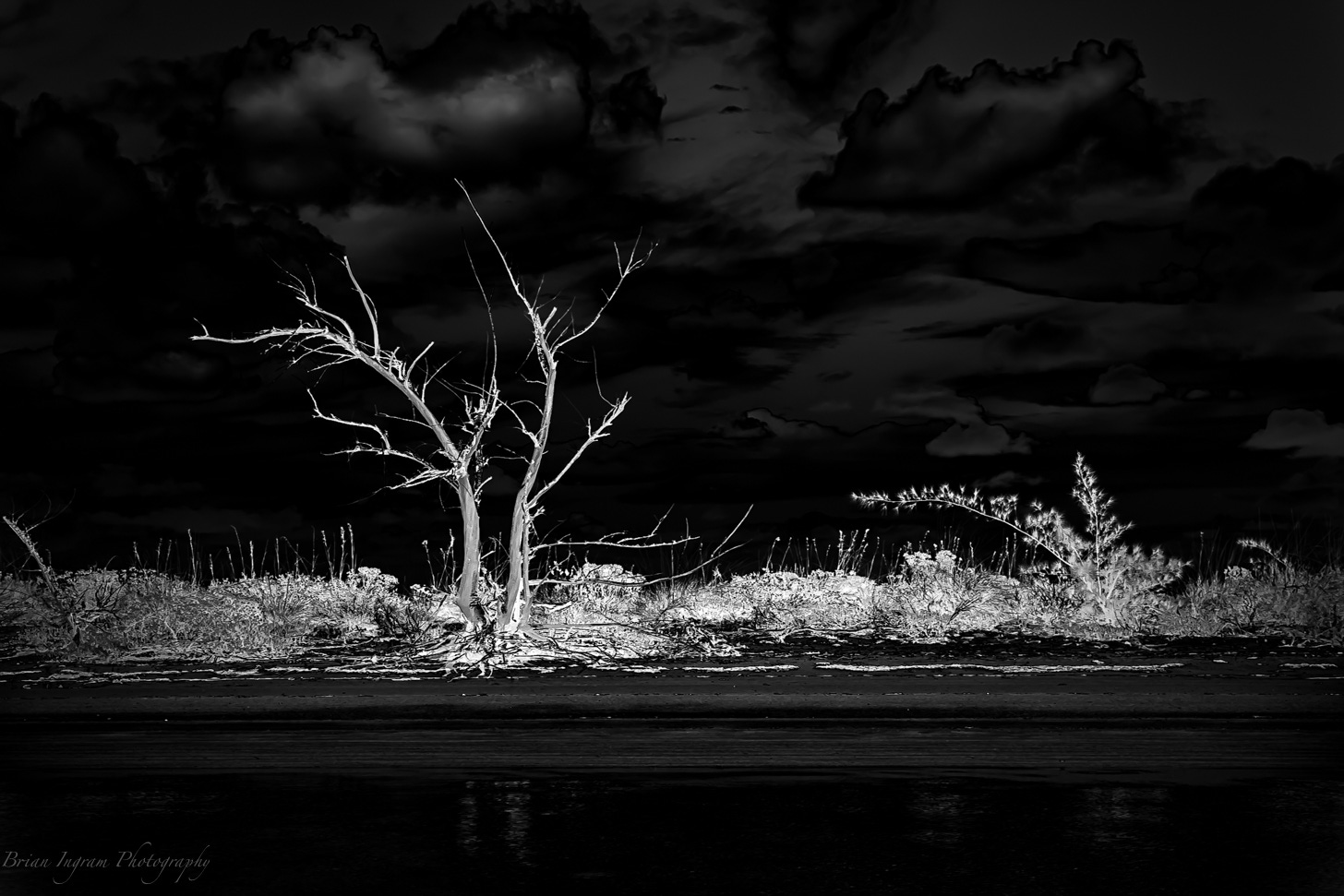


These images of the dead trees and twisted roots of dead mangroves were processed using a black and white treatment that I am fine tuning, intended to shift the focus of the viewer from the obvious and normal, to illuminating what is often unseen or unnoticed.
One of the other really interesting things that I notice while fishing is the way the slightest change in distance and angle can change what you see in a scene. How a seemingly static clump of weather bleached roots can change from just that, to the skeletal wing of some prehistoric giant bat, to the entire head and neck of some smaller creature entangled in the tentacles of some unseen creature just beyond the tree line, again with the too much dystopian fiction...


While imagining all that, you get snapped back to reality when one of these guys enters the flats hunting for a meal. A shark on the flat does not always mean the end to fishing on that flat, depends on how big the flat is, how big the shark is, and if there are more than one. Normally a single small shark is not a big concern to a bonefish, but if you get one or two of these healthy big guys on a flat, the fishing shuts down, and time to move to a different spot.
For safety reasons, moving to a new spot most often entails reeling your line in, storing your rod in the specifically designed rod tubes in the rear gunnels of the boat, and taking a seat on the guest bench before firing up the motor and running off to a new flat. To the unfamiliar eye, much of The Marls looks indistinguishable from any other part, only by the end of the trip do I often start to notice familiar routes and familiar shorelines. The guides, however, know the ins and outs of The Marls and where the fish are most likely to be based on tides and weather patterns, probably also helped by the fact that there is pretty decent cell service throughout most of The Marls, allowing them to communicate with each other during the day.
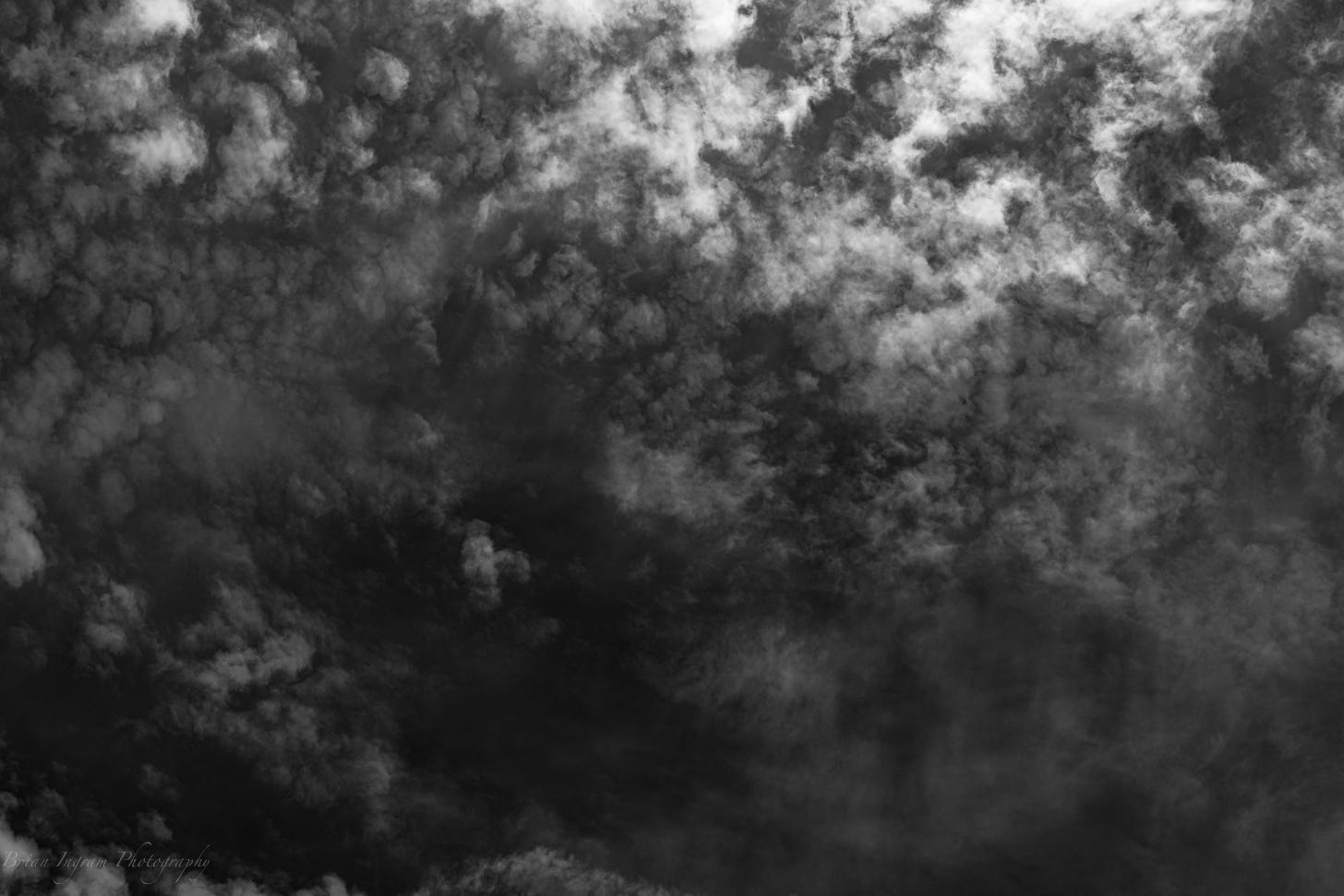
As you near the new destination, determinable only by the unique sound of an outboard engine gradually throttling down on approach, so as to not spook any fish that might be in your path, I start to look around and see what might be available to photograph. Often times it is the clouds and horizon that are the first things to catch my eyes. First you look up, to see if the clouds are going to be a problem seeing the fish, then you follow any clouds there are to the horizon and see what the flat you are going to be fishing is like, nice shallow sandy bottom for easy sighting of the fish, or deeper dark colored grass and vegetation that will make it more difficult to spot them coming in. In doing this routine, I often see a number of things that look interesting and will defer to dad to take the first watch for fish, while I photograph.


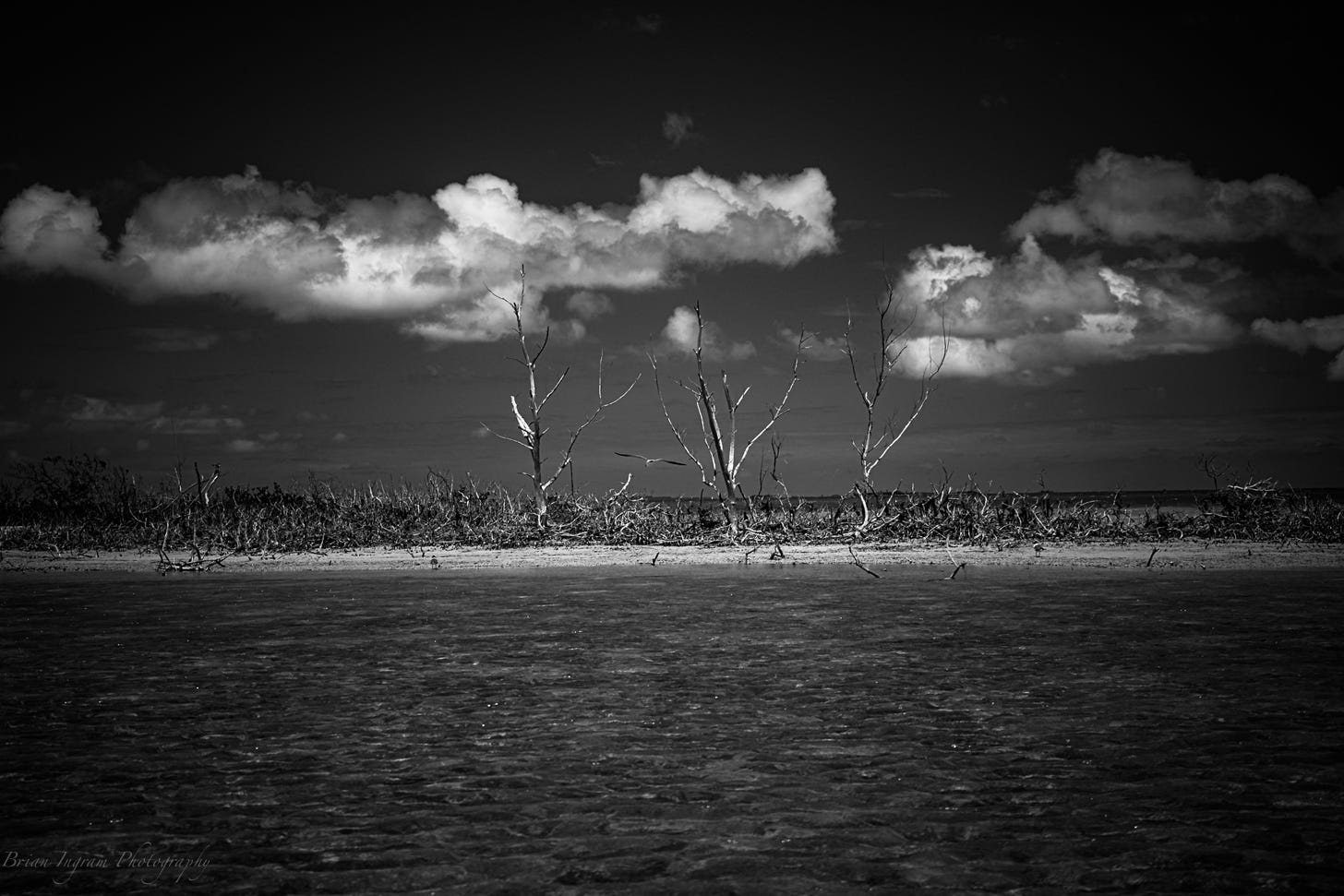
I am not sure the name of the birds in that shot above, but there were a bunch of them protecting that little sand bar. I can only assume there were nests all over it because one bird would sit in among the remains of the mangroves watching us, squawking at us, while another would stand on the shoreline waiting. As we drifted closer to the one sitting in the brush, the one standing guard on the shoreline would take flight dive-bombing at us, also squawking away. This would continue until the one sitting in the brush felt we were sufficiently far away as to no longer be a threat, then it would stop squawking and its partner would retreat back to the shoreline. However, the nests must have been spaced out just perfectly, because as we drifted out of the threat zone of one pair, we would begin drifting into the threat zone of another pair…, making for a noisy and anxious hour or so as you wonder if the bird will swoop down at the wrong moment into the line of your cast and get hooked. It has happened to us in the past and it definitely puts the shut down on the fishing when a bird smacks into the water, and starts thrashing around…. Nothing pulls the sharks in like random thrashing in the water!
At some point in the day we would stop and have lunch, wonderful box lunches prepared by the lodge team that morning, then set out to another spot and do it all again for a few more hours, before heading back to the lodge, to be met with a cold face towel and a cold cocktail of the evening.
A couple last images from this trip before saying goodbye to The Marls, and Abaco Lodge, until next time!
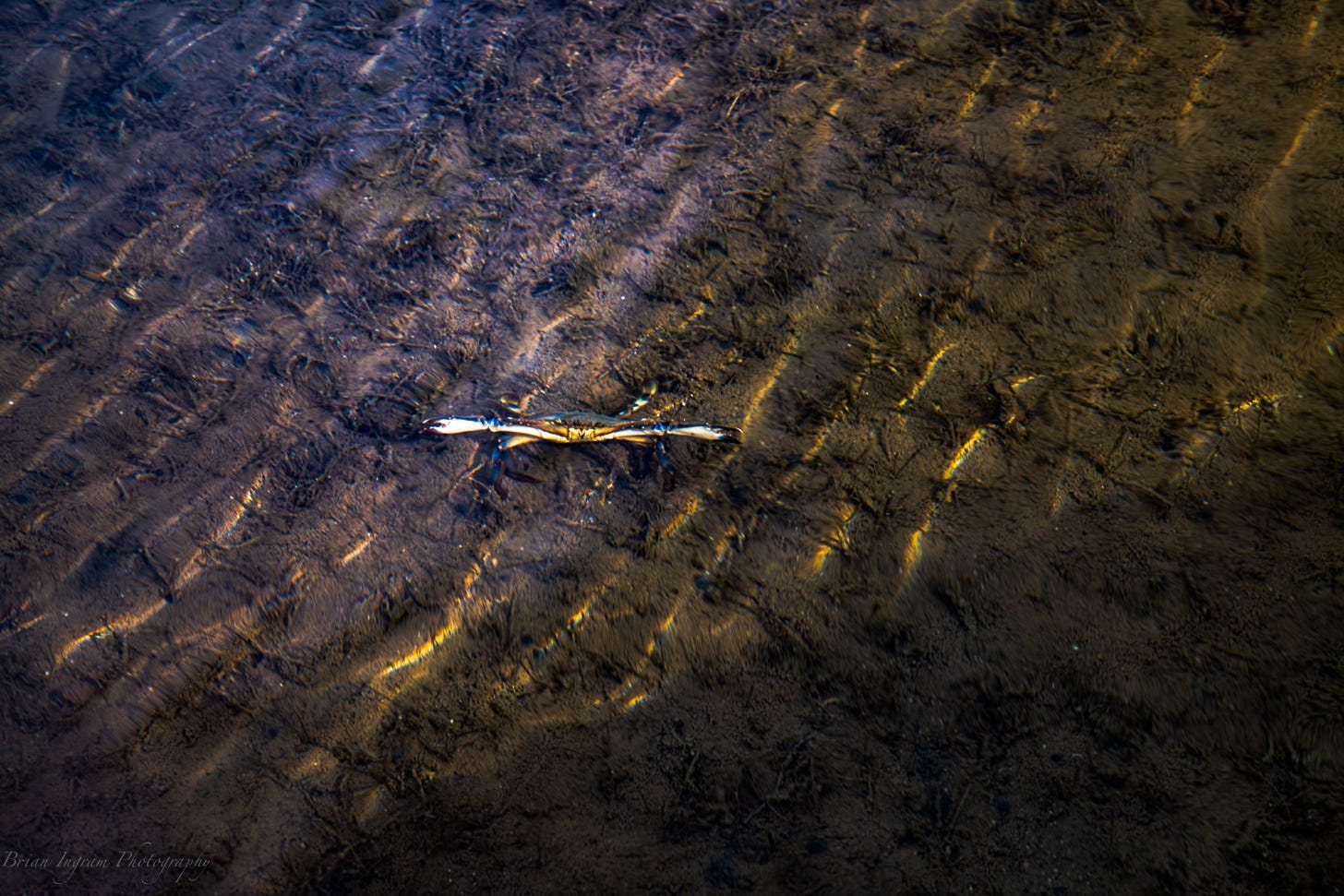
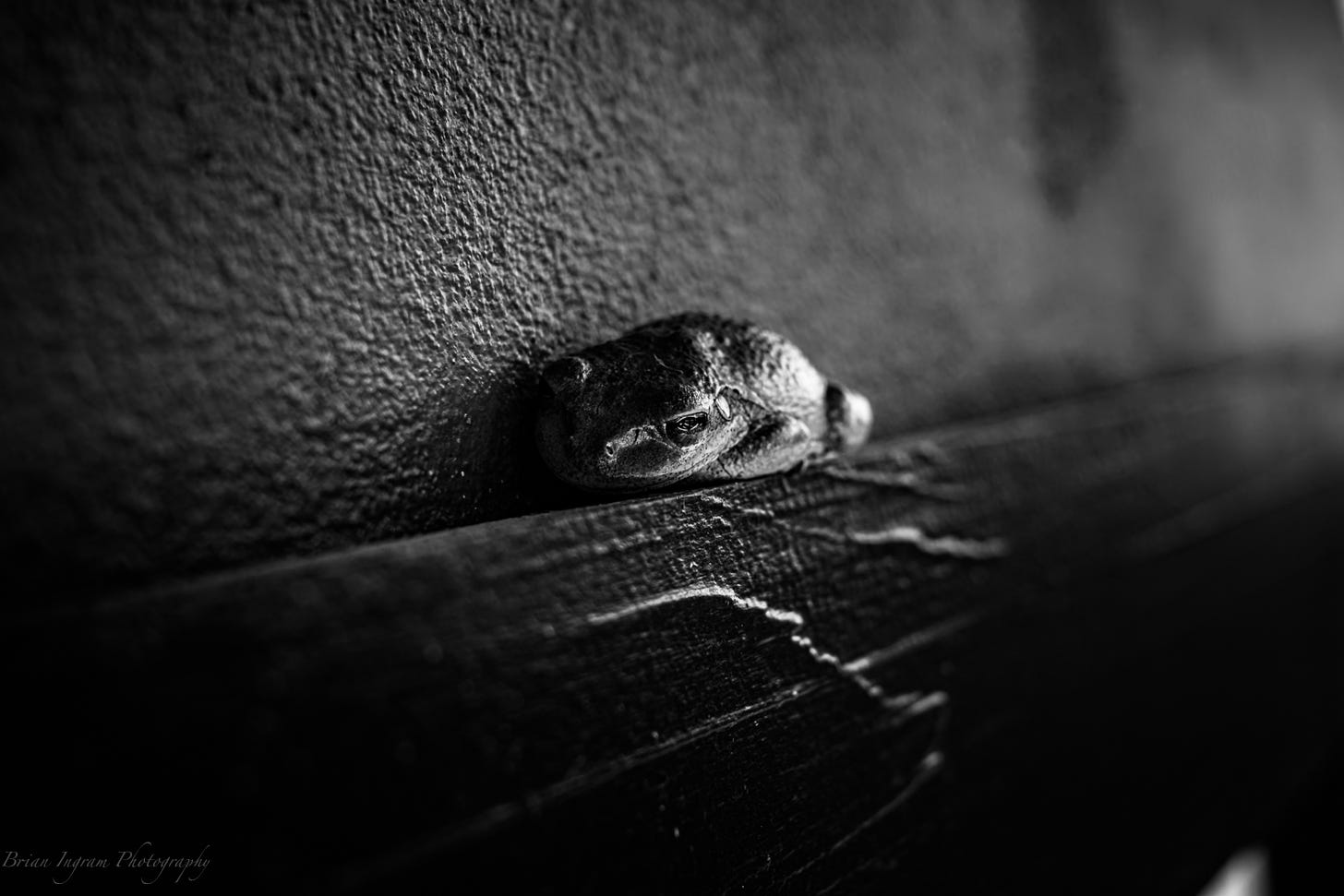
That crab was clearly telling us to get out of his hunting grounds, and that frog was clearly telling me to get out of his face while enjoying the shade of my porch perched on the outside framing of my window.
As always, hope you have enjoyed the images and my ramblings. If you did, consider supporting the work, by subscribing and/or sharing with others that may enjoy this as well.
Thanks,
Brian