
Asolo with Friends
A visit to an oddly busy town in the hills.

Note: This is a longer article with lots of pictures, you will get the best viewing experience in the app or via the webpage. Any of the images that are part of the groupings are just thumbnails and do not show the full scene unless you click on them.
For many of the images in this article, I did multiple processing runs, so you will sometimes see the same image with different treatments.
“What is it about Asolo…”, a question posed to me recently by a friend at dinner. An interesting question really, sure Asolo is in many ways your typical beautiful Italian town nestled just in the hills of the nearby mountains (sort of in its own little range of large hills), but there are so many picturesque towns and hamlets throughout the Vento (and Italy in general), what makes Asolo the one that many people gather in?
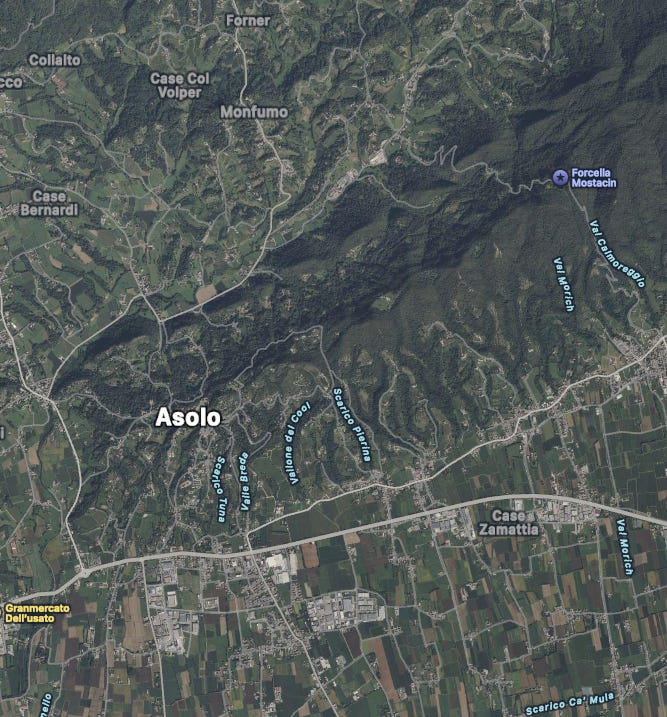
Know as “The Pearl of the province of Treviso” and “The City of a Hundred Horizons”, Asolo is listed as one of the most beautiful villages in Italy, according to the Asolo Wikipedia page. With a rich artistic and cultural history, being the one time home of the poet Robert Browning, actress Eleonora Duse, explorer Freya Stark, violinist Wilma Neruda, and Italian composer Gian Francesco Malipiero, the town has some relatively heavy hitter credentials to draw people in, but having gone there twice now, I still think the question is valid, “What is it about Asolo…”?
To me, being an absolute outsider, it kind of feels like visiting Estes Park (without going to Rocky Mountain National Park, which is a surprisingly frequent occurrence for many people) from places like Fort Collins, it is a little higher in the mountains (so a little cooler in the summer), there are some really nice restaurants, a vibrant city center with a typically beautiful church, a civic museum (that we did not get the chance to see due to time constraints, but we will make a point to come back and check out), as well as a mid 12th century Rocca (hilltop fortress) that is essentially a circular fortification, but with stunning views of the town and the surrounding area. So, it has attractions that are interesting to see while you are taking a quick break from whatever is going on in your life at home, without going far from home and the needs around it.
Our first stop was to the mid 1700s church in the city center. Situated on a hillside, the city center is actually halfway or more up the side of the churche’s exterior wall, so it does not really look like a church from certain angles and to enter the church, you first descend a staircase before seeing its front facade.
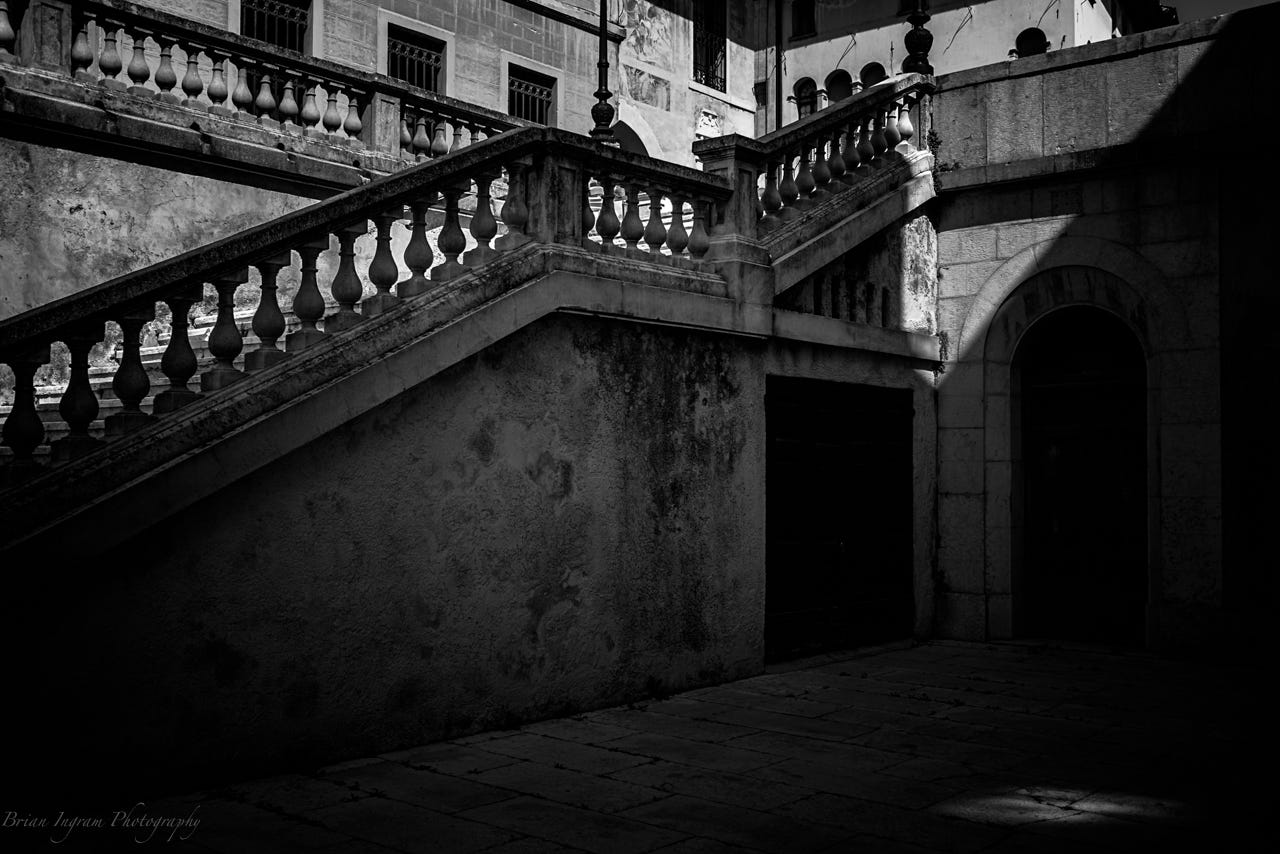
I really liked the lines of this scene, including the light and shadow line leading you down the stairs. I especially liked the fall of the light through the window of the church (to my right), giving that spot of light in the darkness of the lower right of the scene.
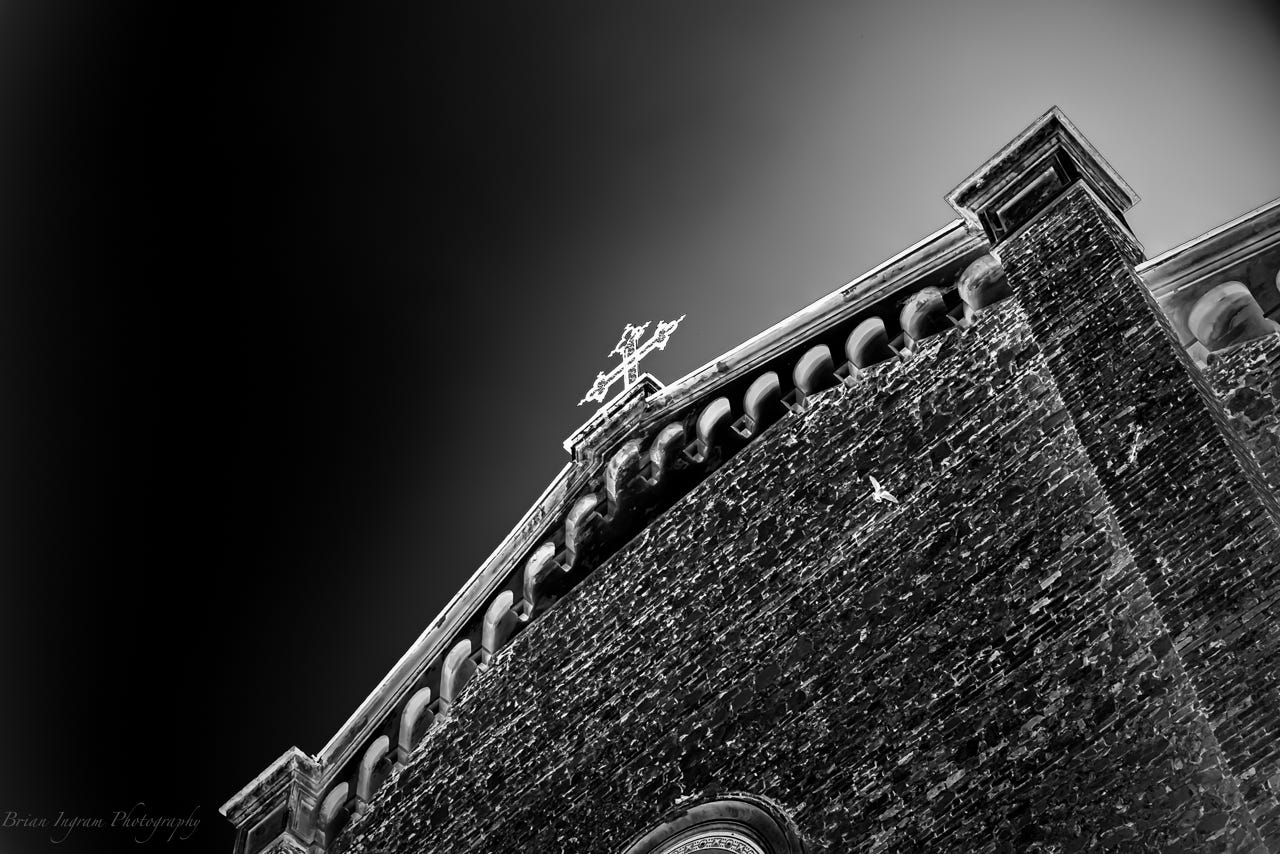
The facade of the church was pretty standard, so I wanted to take a little different approach to the capturing and treatment of the images. The cross at the top appeared to be iron and would be black in traditional color, so I wanted it to stand out brightly along with the shadowed areas of the arches and surrounding details.
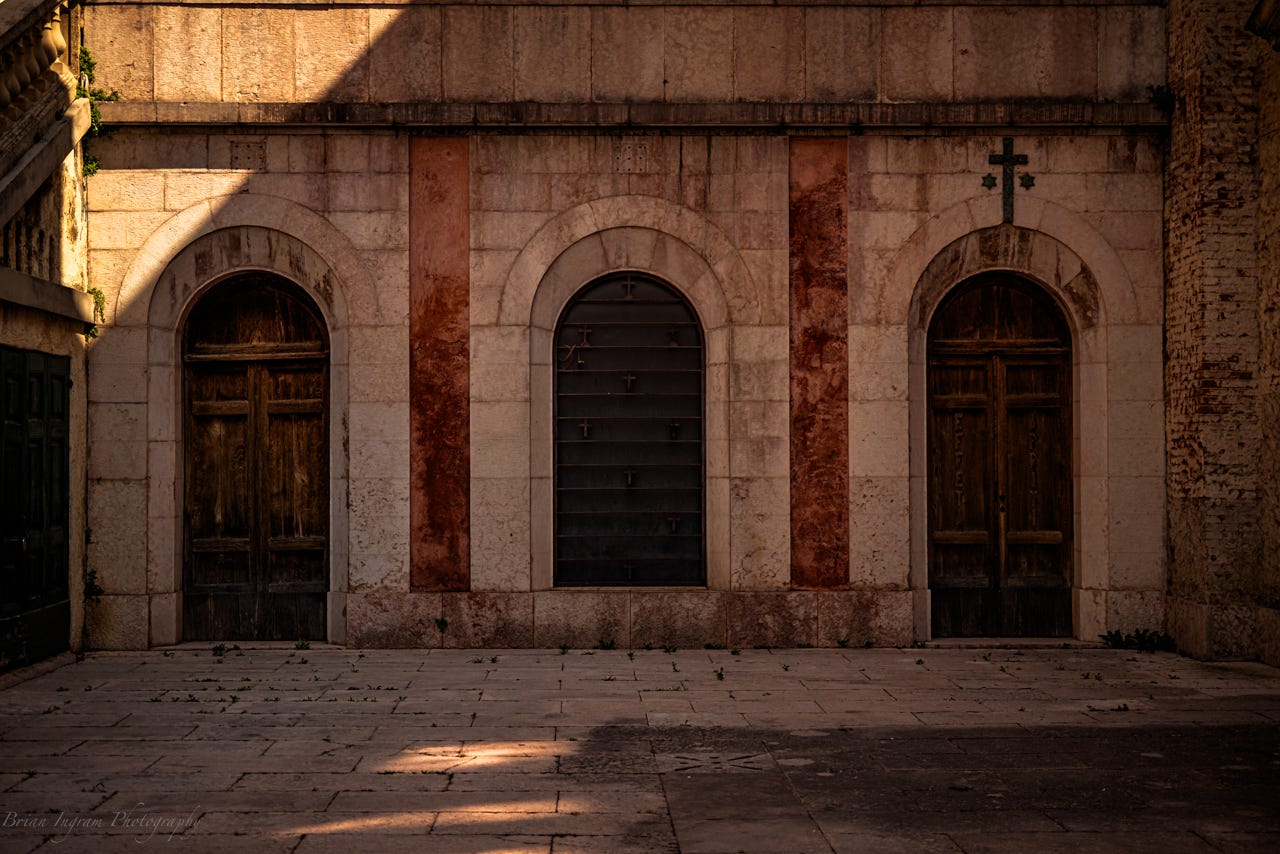
Not really sure why I took this image from the courtyard of the church, or included it in this article, but there is something about it that I get drawn to. Perhaps the lighting, the symmetry, who knows, but there is something…


Doorways are fascinating to me, often well used, multi layered, weathered and worn they frequently tell and interesting story, or can be used to imagine interesting stories. I like the colors, almost like a weathered old wooden ship after decades on the seas, but I also like the textures and mood of the black and white. The colored image has more of a decrepit look like that of someplace abandoned, while the monochrome has an aged but inviting feel, at least to me.


Lit only by the sun through the various windows, the interior of the cathedral was a little dark, but still wonderfully inviting. In the black and white image I wanted to illuminate and highlight the carvings at the peak of the three lower archways.


I really enjoy shooting architecture in the evening when it is illuminated by artificial light. Often times you will see details and structures that are muted during the day when the vast majority of the illumination is coming from above. Processing images in the way I have been recently attempts to mimics the sense of night time photography with artificial lighting, to a certain degree revealing details in the scene that are not always noticed under traditional lighting or even in traditional black and white.
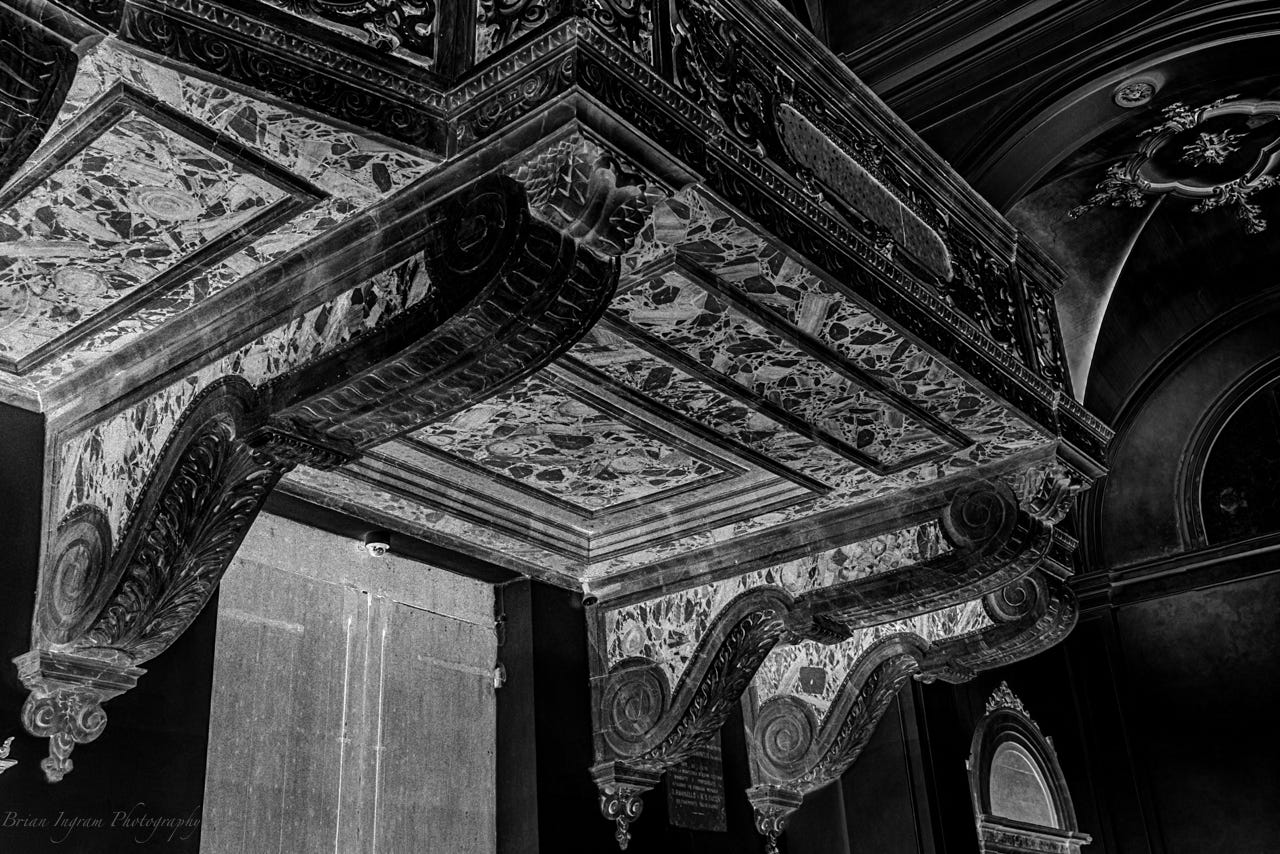
Above and to the back of the nave is a massive balcony structure, I assume it is carved stone, but can’t be certain, with a very interesting surface design inlaid in it. Atop this structure sits a pretty large organ. When seeing this in color it is impressive, but with the dimmer lighting, the finer details of both the carvings and the inlaid work were lost in the shadows.
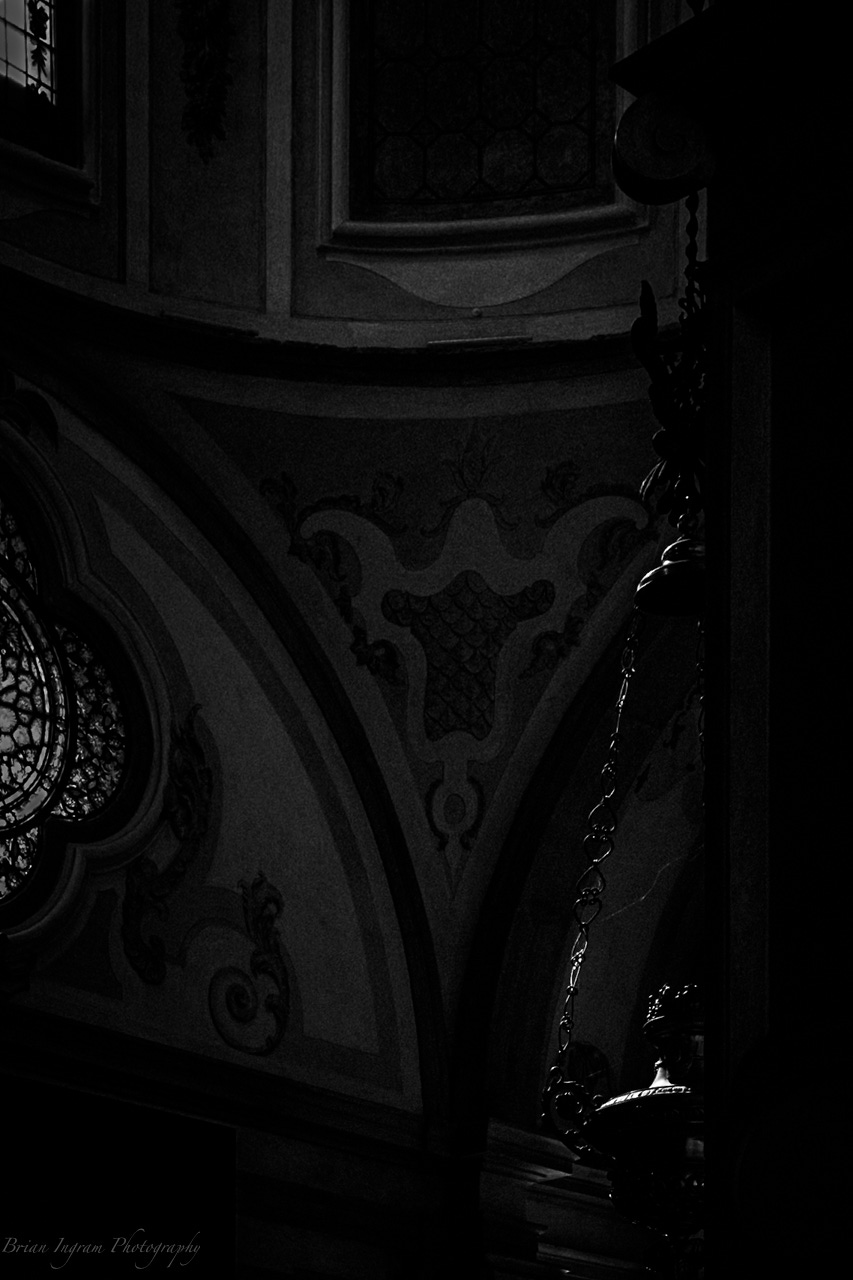
I particularly liked the way the light from the stained glass was illuminating the chain and top of this lamp.
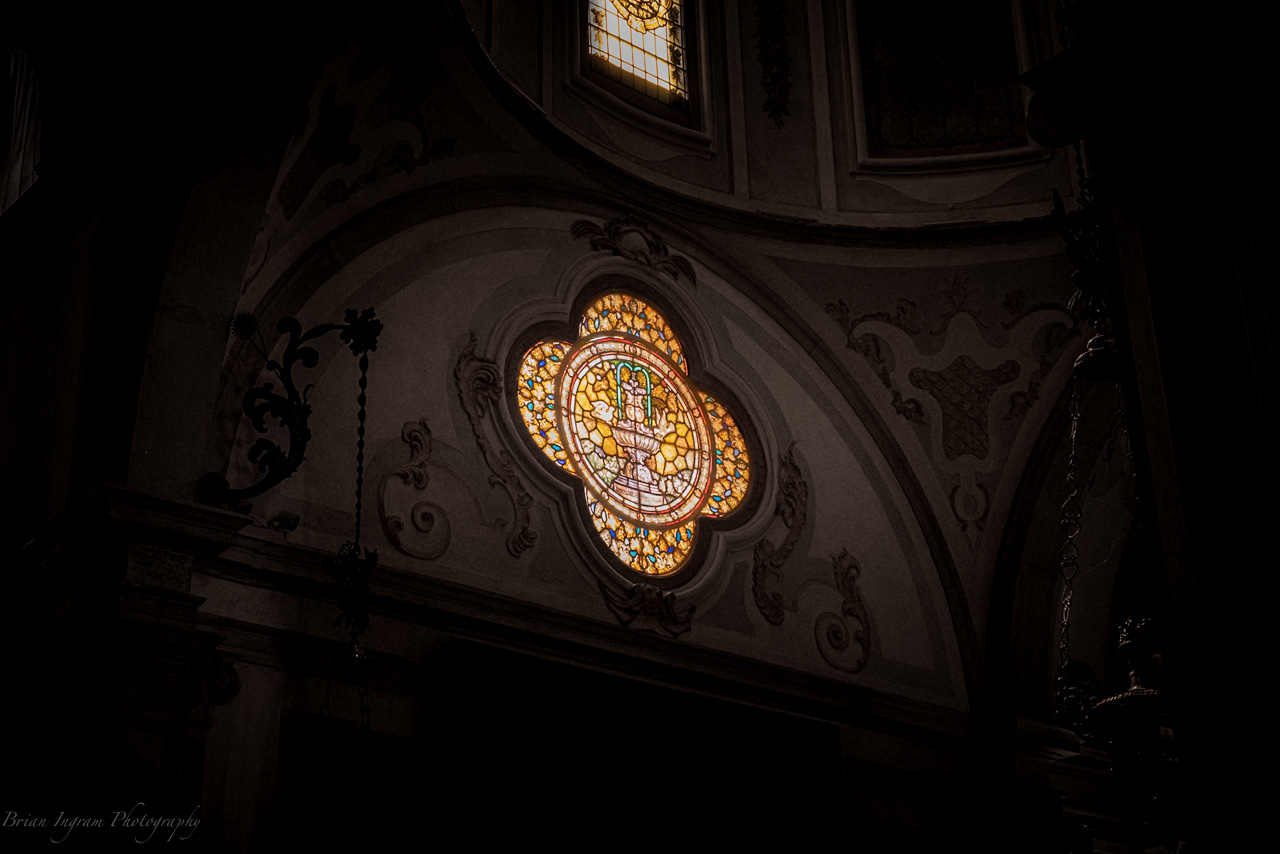
A color shot of the stained glass, as well as the chain and lamp from the previous image. For this image I under exposed the image by two full stops in the camera to get the exposure set for the windows, then I masked and desaturated by 75% the entire image, except the windows. This resulted in a nice muted scene surrounding the window and focuses the viewer on the subject matter. It also kind of looks like a scene out of Bram Stoker's Dracula!
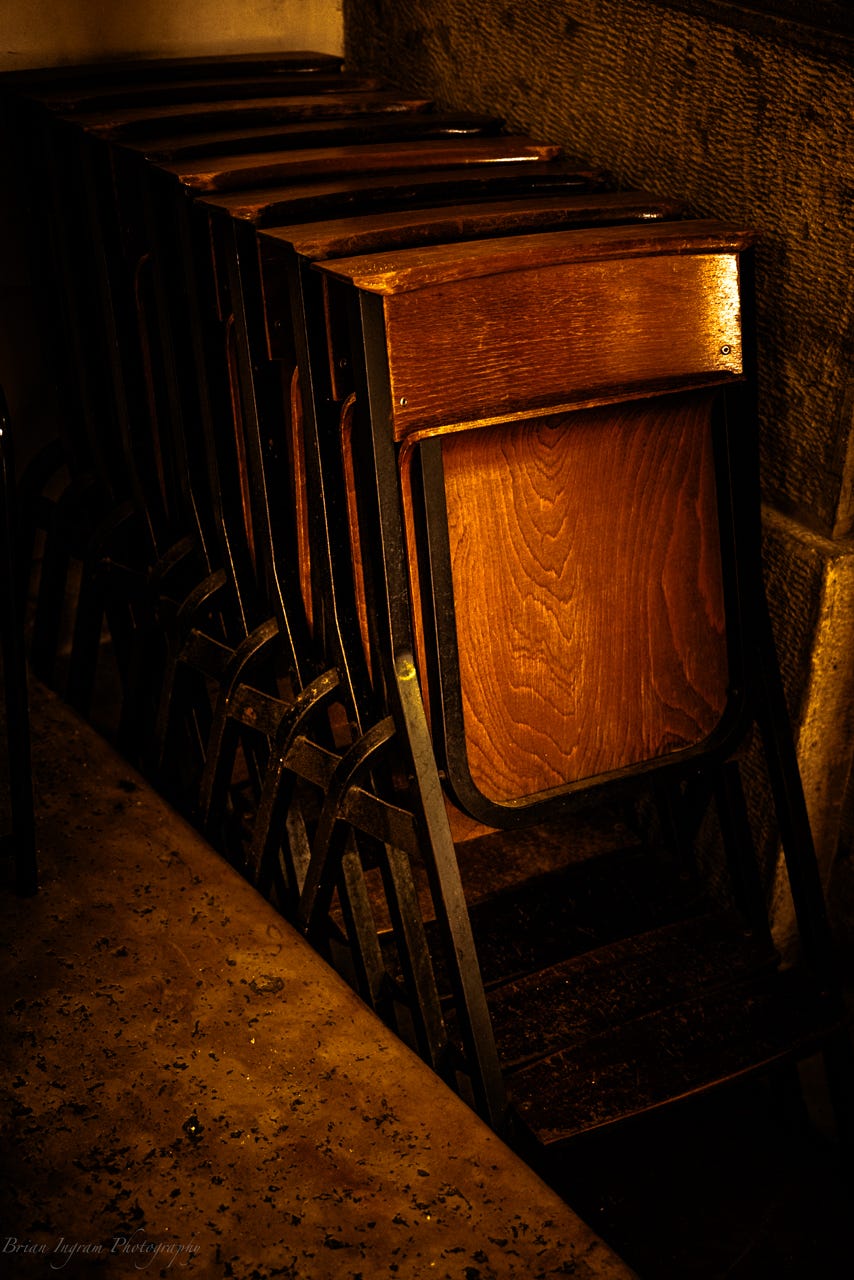
Another “not sure why I like it…” image, but there is something about these old chairs folded and staked in the corner waiting to be used that caught my eyes, the light, the texture, the repeating shape, etc…, who knows.
Something interesting about some Italian (maybe others that I have not seen yet as well) churches is their appearance to contain a multitude of structure merged together, making for some truly amazing layerings. The Asolo Cathedral exhibits this as well.


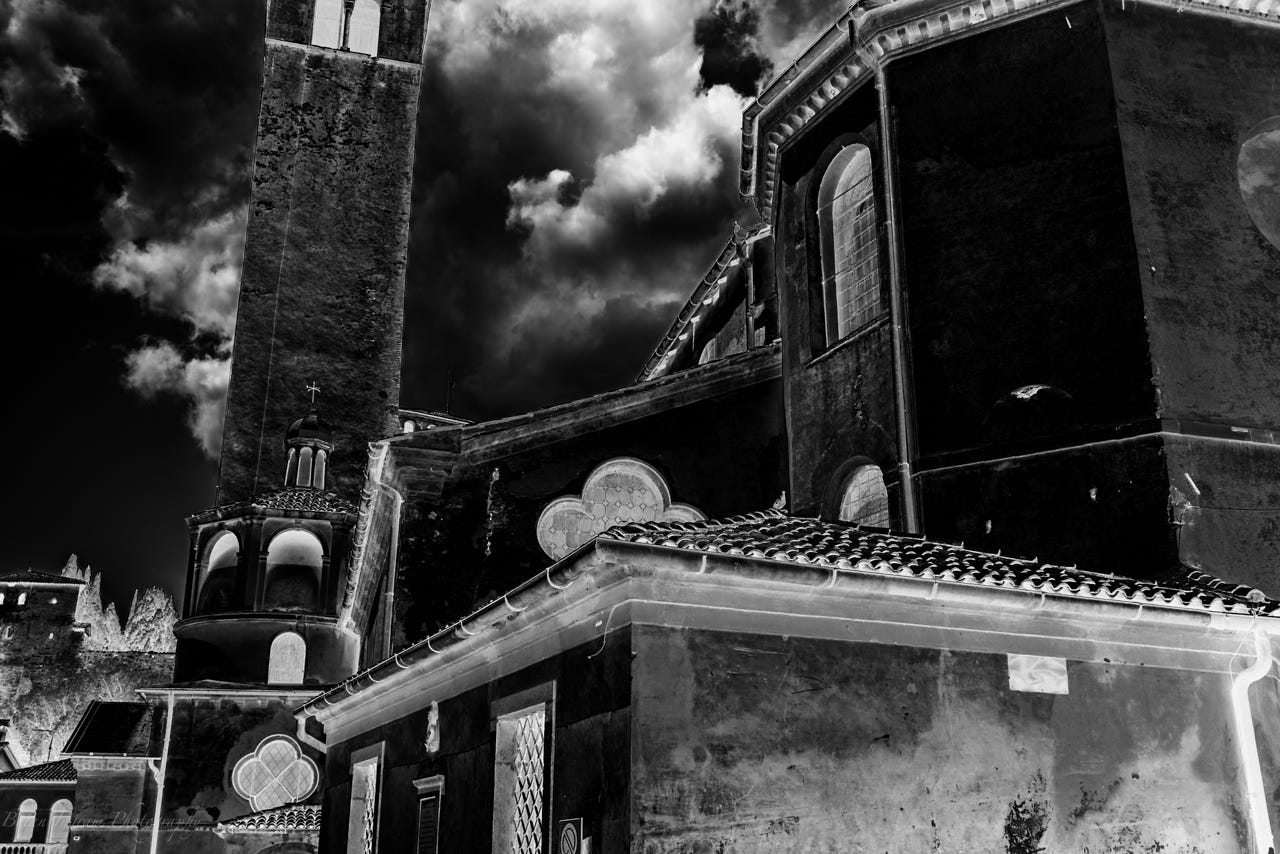
For this image, I treated it this way to make it feel more foreboding, almost like it is towering above you, although since we are at an elevated street level, it is really not that much taller.
After the cathedral we wondered through the city center on our way up to the fortress.


Visiting the Rocca site entails a long walk/stair climb to the top of the nearby hills so you can start to get an idea of why this village from the late 500s AD would become a strategic concern in the 12th and 13th centuries when the fortification was built. From this vantage point watchmen could see for miles in virtually all directions, though I focused the majority of my images on aerial views of the main city center areas.


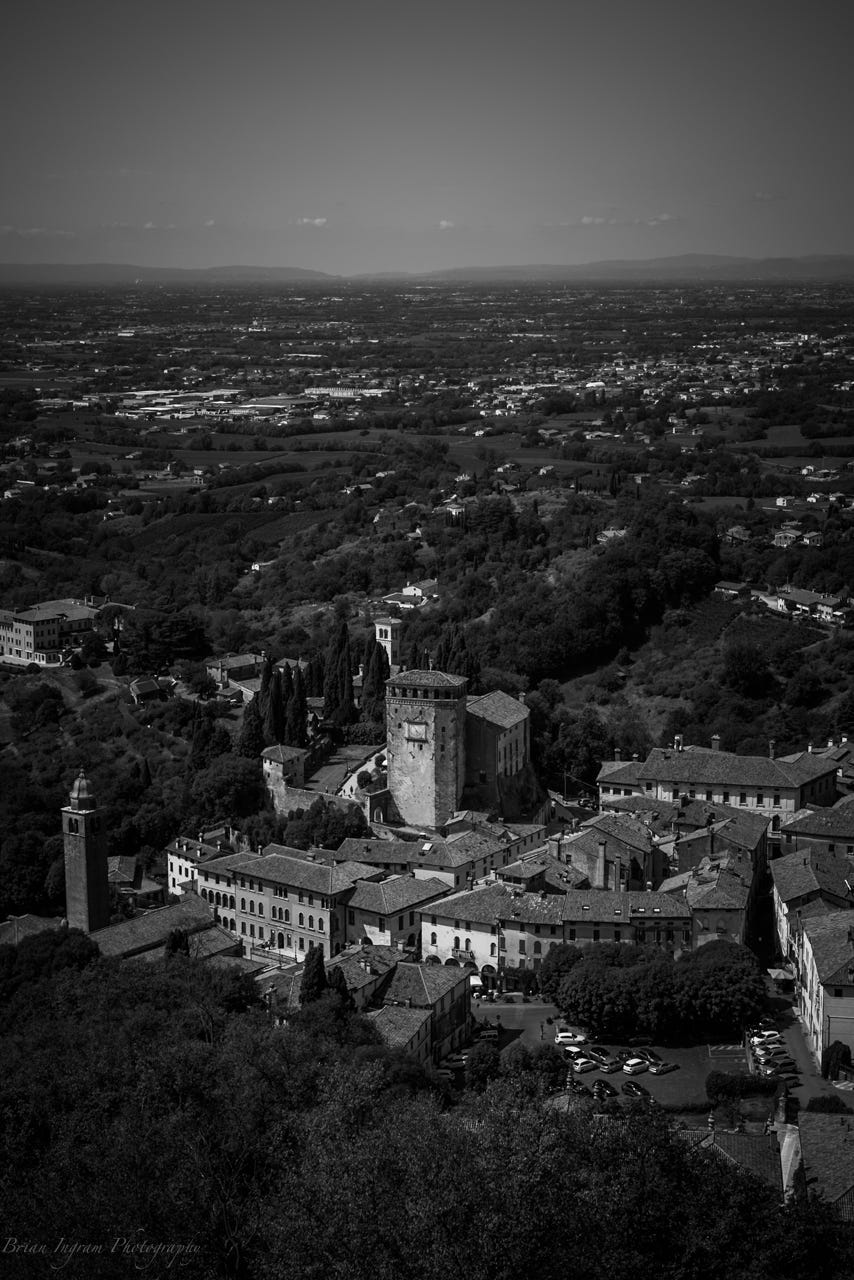


Always on the lookout for a beautiful flower with a beautiful background. This guy was growing out of the top of a twenty to thirty foot high stone wall…!


The Rocca itself has some interesting textures and patterns with the staircase ascending to the top of the wall, as well as the railing along it.
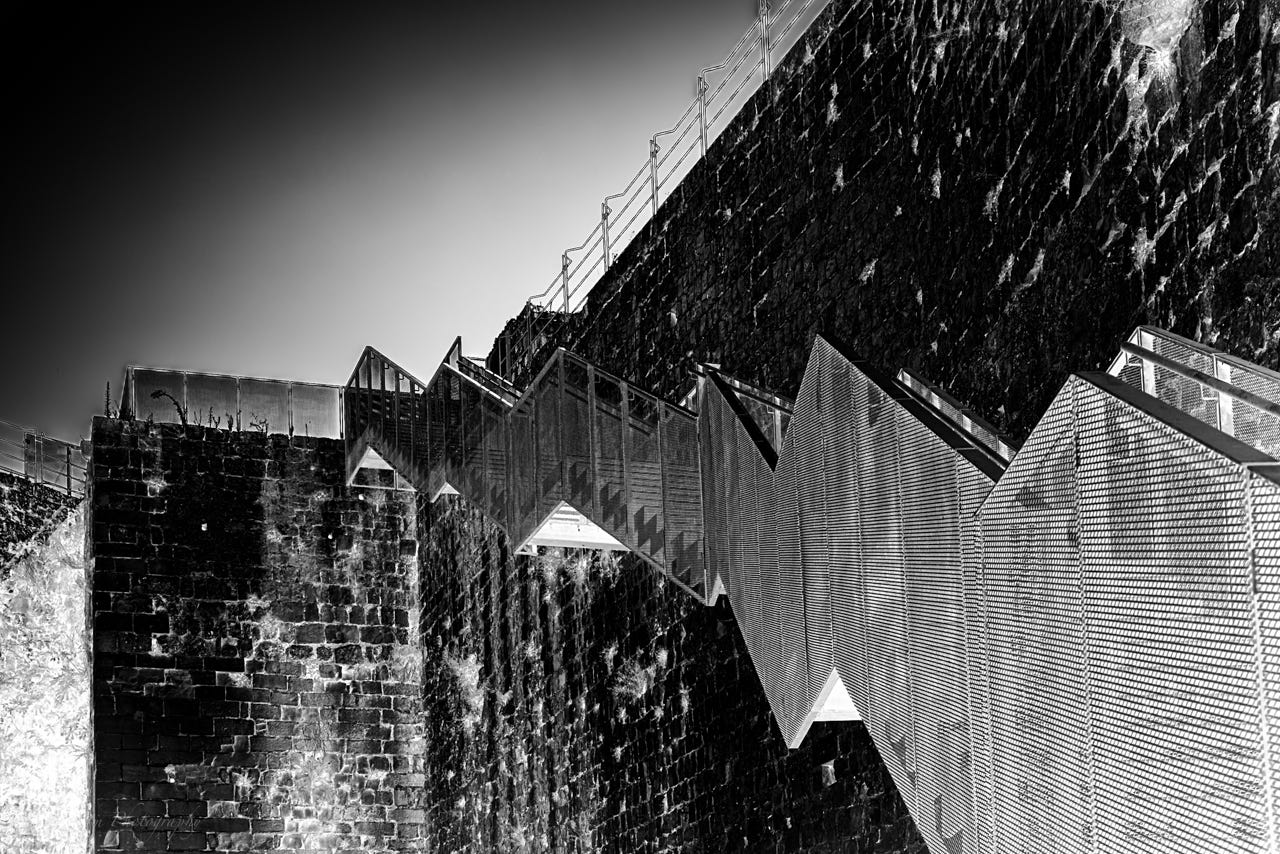
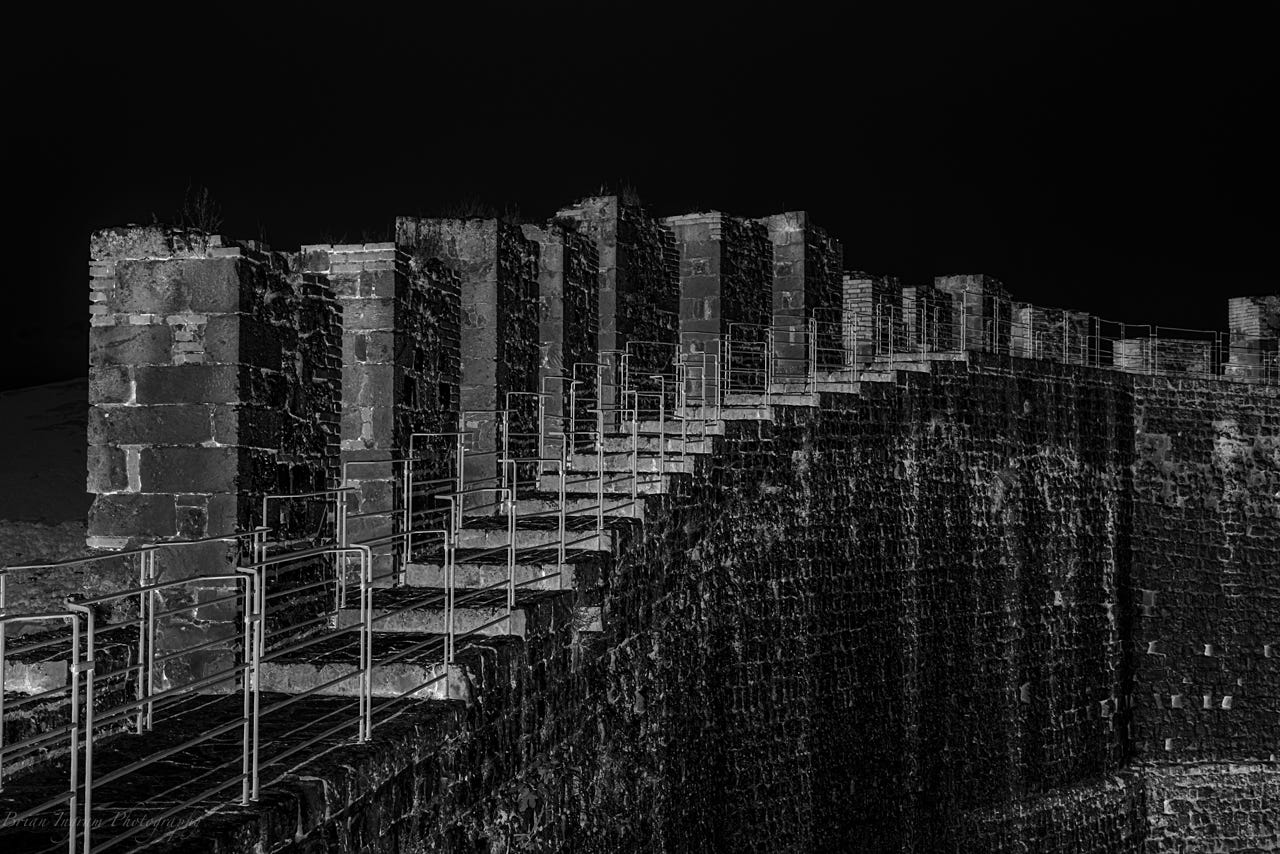
After the Rocca, we headed back to the city center for lunch at a little place our friend popped into on the way into town from the car park. He is quite good at finding the tasty spots with a good “locals” feel. As it turns out, popping in early and reserving a 12:30 table was a smart (and necessary) move since the dinning area was full (with people being turned away) as we came to our spot.
The trip down from the castle was a little different from the one going up, with a few new things to photograph.


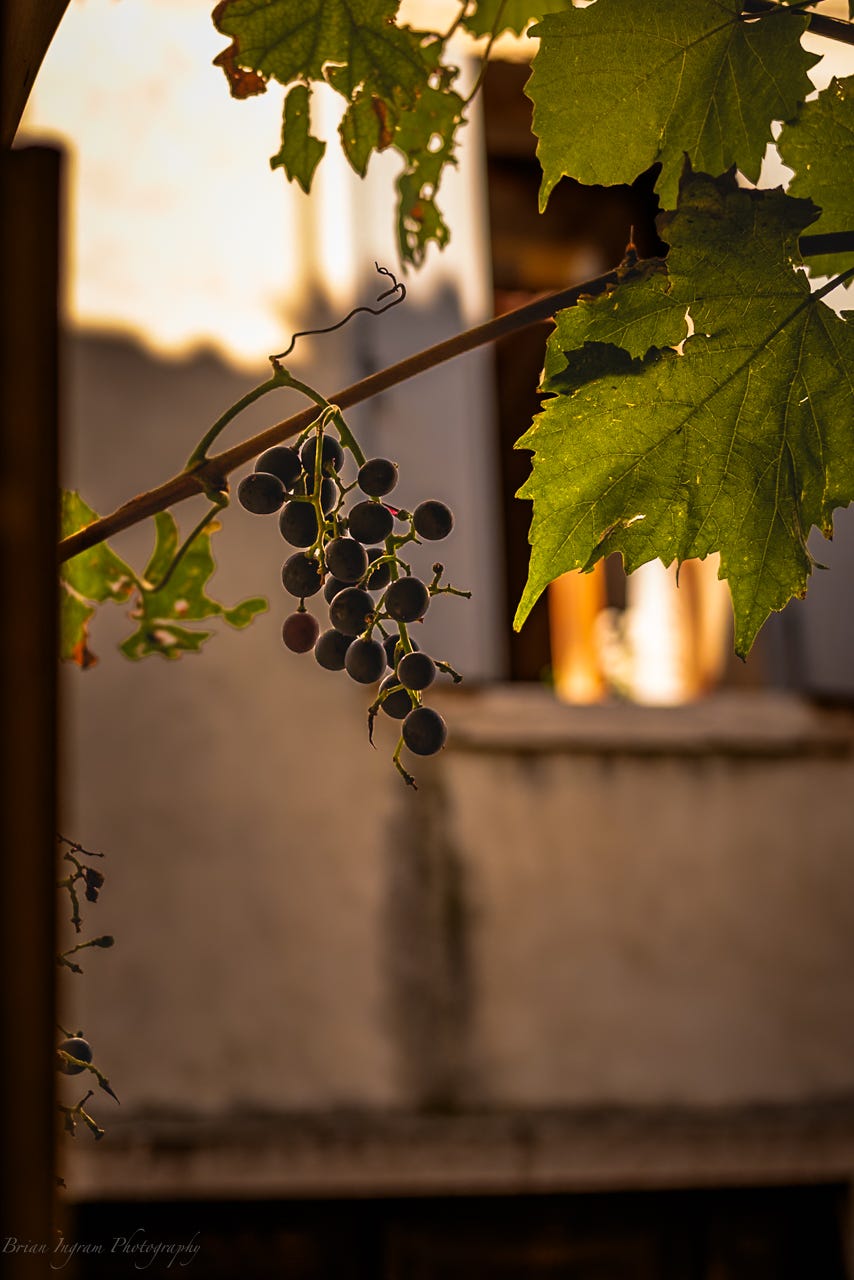


After a wonderful lunch, we headed to another of Asolo’s historical attractions The Castle of Caterina Cornaro, now the Eleonora Duse Theater. Along the way to the castle we passed a few scenes that caught my eyes.


The castle, dating back to the late 12th and early 13th century, has had quite the diverse past ranging from strategic fortress to the home of royalty to a prison and finally the city theater.
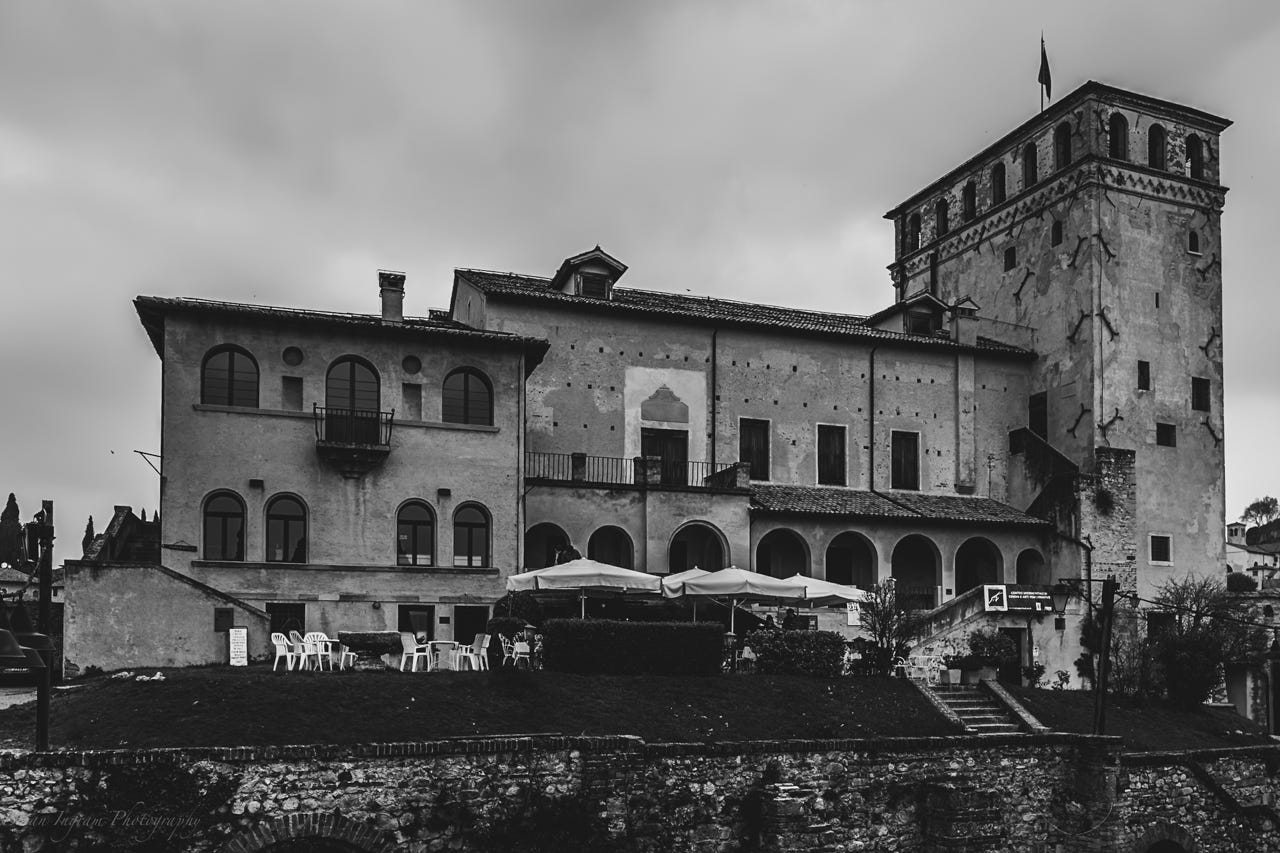
Entering the grounds of the castle, atop a high point overlooking the town of Asolo, you get some pretty good views of the surrounding area as well.


In the last image, you can see the fortress castle (La Rocca) at the top of the hill in the background.


The prominent feature of the Castle of Caterina Cornaro is the tower on one end. Seeing all those dark structural integrity braces on a light colored surface, I figured this structure would present interestingly when processed in this manner. Although I might tweak it a little in the future, it certainly did not disappoint.
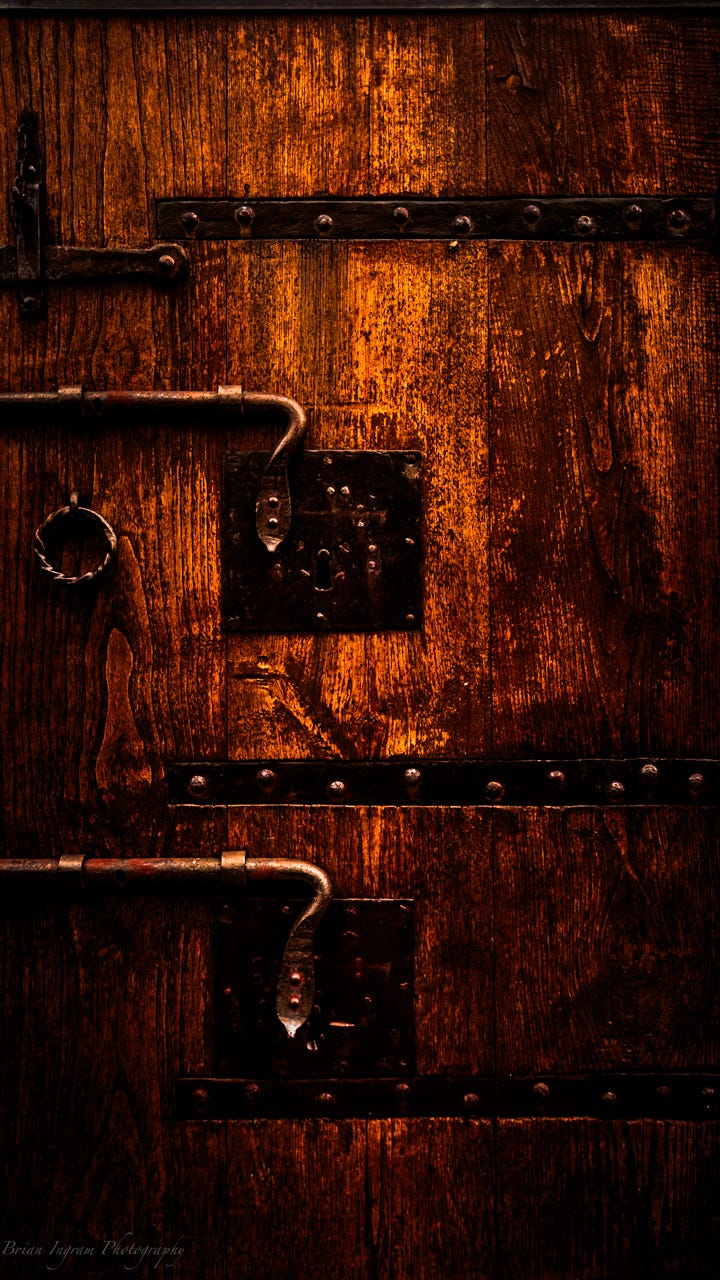
The last shot in this article is one of my favorites, this imposing outer barracks prison cell door! This one opened out from the structure, but there was an equally impressive one directly on the other side that opened into the cell. Not sure why there were two, perhaps just additional security, or maybe some sort of secured entrance making sure that as one door was opened any prisoners did not try to overpower and push their way through, either way this door is magnificent with its coloring, textures, and beautiful ironwork. Who would not what this as their front or even bedroom door!
So, “What is it about Asolo…” I don’t really know what it is that draws people here over other beautiful towns and villages in this region of Italy, but I suspect that it is something less about the historical figures that once lived here, the beauty of the church, or the sites of the civic museum, and likely more about the ease of accessibility, slightly cooler (to a degree) temperatures, and the general culture of Italians to make a day out of visiting a place with good food, comfortable outdoor seating at a cafe, and good people watching in a city center with a wonderful view. Asolo has certainly shown up in some tourist guides somewhere (we heard a lot of English being spoken), but it seemed like there were plenty of Italians enjoying a day out in the fresh air and slightly cooler temps during these hot summer days.
Well that does it for our recent trip to Asolo. There are more images that I took and just have not yet had time to process, but these are a representative selection of them all.
As always, hope you have enjoyed the images and my ramblings. If you did, consider supporting the work, by subscribing and/or sharing with others that may enjoy this as well.
Thanks,
Brian
Regarding the photo of the three doors: it’s possible that what affects you is simply the matter of it being three doors —three is such a significant and symbolic number. The mystery of the three doors. Thank you again for this wonderful post, your photographs and not only beautiful but, in many cases, exquisite and delightfully experimental.